
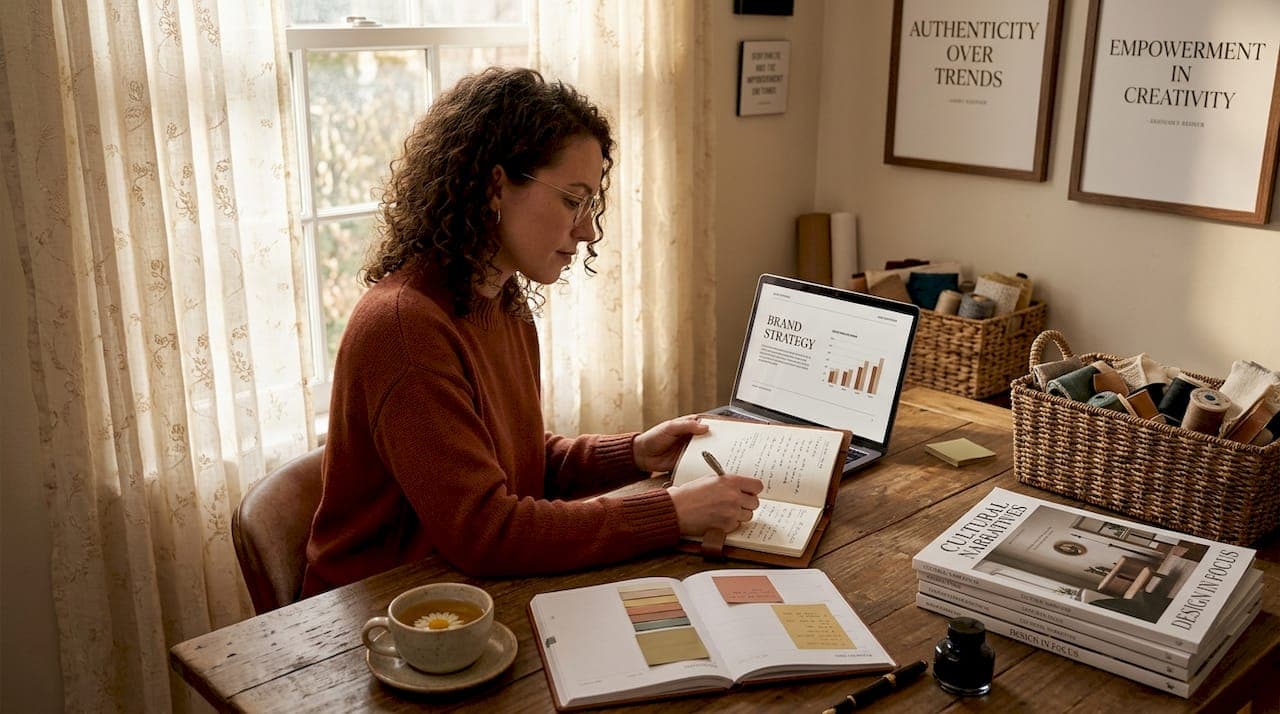
Building a name in media when you're a woman with a specific, unapologetic vision is not just hard. It's a different game entirely. Developing a female-led media brand means fighting for credibility in spaces that weren't designed for you, while also resisting the pressure to dilute your voice to fit a broader audience. Women-owned businesses now represent 40% of all US businesses, generating $2.8 trillion in revenue. The opportunity is real. What's missing for most aspiring founders isn't ambition. It's a structured, honest playbook for turning passion into a brand that lasts.
Table of Contents
- Key Takeaways
- Developing a Female-Led Media Brand: The Foundation
- Building a community, not just an audience
- Content strategy and editorial discipline
- Monetization and scaling operations
- Troubleshooting challenges and measuring success
- My honest take on building in this space
- Take your next step with Herpleasuremedia
- FAQ
Key Takeaways
| Point | Details |
|---|---|
| Niche before scale | Define a specific, passion-driven niche and brand voice before building audience or content. |
| Own your audience | Move followers from social platforms to email lists and private communities you control. |
| Editorial discipline wins | Consistent, curated content beats high-volume publishing every time for trust and loyalty. |
| Build a value ladder | Layer free content, mid-tier products, and premium offerings to create sustainable revenue. |
| Watch for the founder trap | Transition from personal brand to scalable IP early to avoid over-dependence on one face. |
Developing a Female-Led Media Brand: The Foundation
Before you post a single piece of content, you need to do the work that most people skip. The brands that collapse within two years are almost always the ones that started with aesthetics and skipped architecture.
Nail your niche obsession
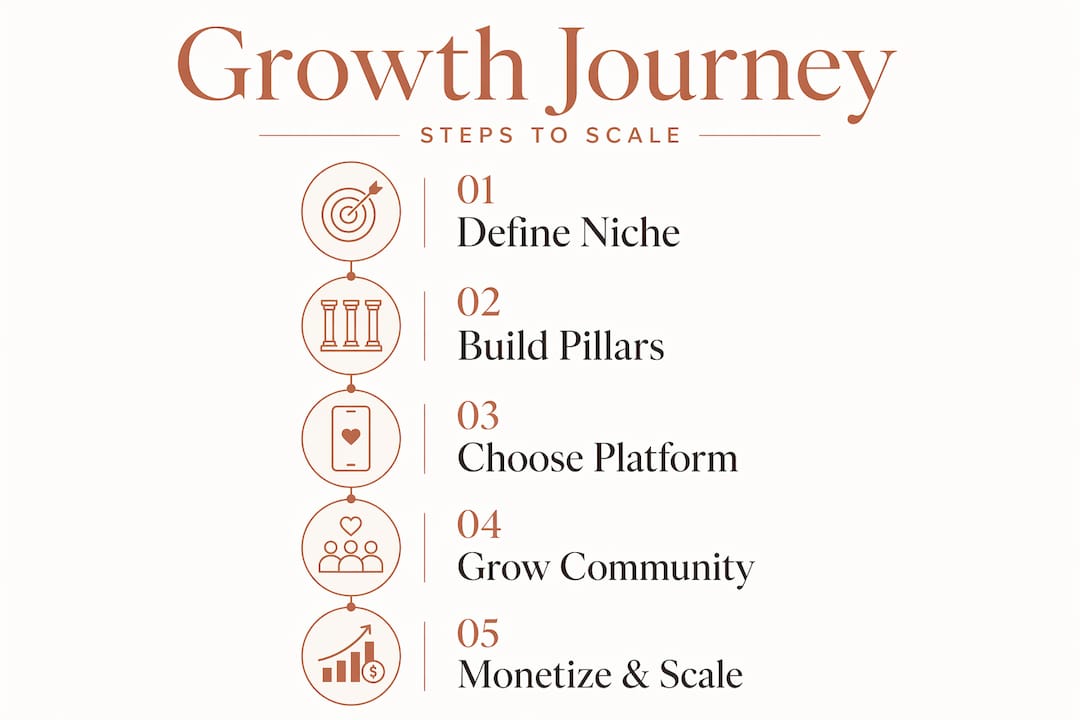
Your niche should not be "women's wellness" or "female entrepreneurship." Those are categories. Your niche is the specific intersection of topic, perspective, and audience that only you can own. Herpleasuremedia, for example, doesn't just cover Black women's stories. It centers liberation, bodily autonomy, and generational healing as a cultural conversation. That specificity is what makes it a brand, not a blog.
Ask yourself: What topic could you talk about every week for five years without running out of things to say? That's your niche. The more specific your answer, the stronger your foundation.
Build brand pillars, not just topics
Brand pillars are the recurring thematic anchors that give your content a spine. Think of them as the three to five lenses through which you interpret everything. A media brand covering Black women's health might have pillars like medical advocacy, ancestral wellness, community care, and body politics. Every piece of content should connect to at least one pillar.
This matters because pillars protect you from publishing chaos. When you're tired, overwhelmed, or out of ideas, your pillars tell you what to make next.
Choose one anchor platform first
Spreading across five platforms on day one is a trap. Pick the platform where your audience already gathers and where your content format fits naturally. Podcasts work well for nuanced, long-form conversations. Short video works for cultural commentary with visual energy. Start there. Build depth before you build width.
Pro Tip: Write a one-paragraph brand manifesto before you launch anything. It should state who you serve, what you believe, and what you refuse to do. Read it every time you feel tempted to create something off-brand.
Building a community, not just an audience
There's a difference between an audience and a community, and it matters more than most founders realize. An audience watches. A community participates, advocates, and returns because they feel ownership in what you're building.

65% of media companies lack a formal audience development strategy, which means most brands are building on borrowed land. Social media followers are not yours. The platform can change its algorithm, restrict your reach, or shut down. Your email list and private community belong to you.
Here's how to move people from rented to owned:
- Give something worth moving for. A free guide, a private audio series, or early access to content works far better than a generic "subscribe to my newsletter" ask.
- Use tools built for community. Platforms like Circle or Geneva let you create structured, moderated spaces where members can connect around shared interests rather than just consume your content.
- Make community members feel seen. Feature member stories, ask for input on content decisions, and respond to messages personally in the early stages. That intimacy is what turns followers into loyalists.
- Protect the culture. Set clear community guidelines from day one. The tone you allow in your community becomes the tone of your brand.
Pro Tip: Set a goal to move at least 10% of your social following to your email list within the first 90 days. That number, not your follower count, is the real measure of audience health.
The most common pitfall here is treating community as a marketing channel. It isn't. It's a relationship. When you start sending your community only promotional content, they disengage fast. Give more than you ask for, consistently.
Content strategy and editorial discipline
Consistency is not about posting every day. It's about showing up with the same quality, the same voice, and the same editorial standard every time you publish. Founder-led media brands grow by acting as Chief Curators rather than content machines, applying a strict editorial filter to everything they publish.
The four content types you need
A balanced weekly content mix includes four distinct formats, each serving a different reader intent:
| Content Type | Purpose | Example |
|---|---|---|
| Timely | React to current events through your editorial lens | Commentary on a news story affecting your audience |
| Interpretive | Add context and analysis to ongoing conversations | Deep-dive essay on a cultural trend |
| Evergreen | Durable guides that stay relevant for years | "How to advocate for yourself in a medical setting" |
| Community | Feature your audience's voices and experiences | Member spotlight or reader Q&A |
You don't need equal amounts of each. You need intentional amounts based on what your audience actually needs from you.
Avoiding panic publishing
Panic publishing is what happens when you haven't posted in two weeks and you throw something together just to fill the silence. It dilutes your brand faster than a long absence would. Audience loyalty builds through consistent, thoughtful curation and a clear brand voice, not volume.
Build a content calendar with at least four weeks of planned content before you launch. Leave room for timely responses, but never let urgency override quality.
Pro Tip: Batch your content creation into dedicated blocks rather than creating daily. Two focused production days per month can generate more quality content than daily scrambling.
Monetization and scaling operations
Revenue is not a dirty word. A media brand that can't sustain itself financially can't sustain its mission. The goal is building a value ladder that moves your audience from free content to paid offerings at a pace that feels natural.
Here's a practical framework:
- Free content layer. Your podcast, newsletter, or social content. This is your trust-builder and your top-of-funnel. It should be genuinely good, not a teaser for paid content.
- Low-ticket products. Workbooks, mini-courses, or digital guides priced between $27 and $97. These convert warm audience members who aren't ready for a bigger commitment.
- Mid-tier offerings. Workshops, membership communities, or curated content libraries priced between $100 and $500 per year. This is where community and content intersect.
- Premium offerings. Consulting, licensing deals, live events, or branded partnerships. These require a track record and a clear audience profile to pitch effectively.
Successful female founders build media infrastructure that integrates earned, owned, and partner media into a scalable system. Emma Grede is a clear example. She didn't just build a brand. She built portable authority that travels across platforms and partnerships.
When you're ready to pitch platforms or licensing deals, rights clarity is non-negotiable. Know what you're selling, what you're keeping, and what terms you'll walk away from. Offer deal options: higher fees with limited rights, or lower fees with broader rights. That flexibility increases your negotiation leverage and protects your long-term IP.
Pro Tip: Hire a content manager before you think you're ready. The moment you can afford 10 hours per week of support, take it. The founder trap is real, and it stalls growth faster than any algorithm change.
Troubleshooting challenges and measuring success
Female media entrepreneurship comes with obstacles that go beyond the standard startup challenges. One of the most insidious is the media myth cycle itself. Research analyzing 2,600+ global news stories found that female founders are disproportionately subject to cycles of mythologizing followed by public takedowns. The "girlboss" narrative builds women up in ways that make the fall inevitable.
The antidote is nuanced storytelling grounded in data and complexity rather than personal mythology. Build your brand around ideas, community, and editorial perspective. Not around your personal story alone.
Watch for these warning signs that your brand is in trouble:
- Your audience follows you but can't describe what your brand stands for
- Your content performance drops significantly when you take a week off
- You have no documented editorial guidelines that someone else could follow
- All revenue flows through your personal involvement
When you see these signs, it's time to introduce new brand voices. Bring in contributors, co-hosts, or sub-brand leads who share your editorial values. Building scalable brand assets means transitioning from founder face to brand identity.
For measuring progress, track these metrics with intention:
- Email list growth rate month over month
- Community engagement rate, not just size
- Content completion rates for audio and video
- Revenue per audience member, not total revenue
"The brands that last are the ones that build systems, not just stories. Your audience should be able to feel your editorial vision even when you're not in the room."
My honest take on building in this space
I've watched a lot of female-led media brands launch with enormous energy and collapse within 18 months. Not because the founder lacked talent. Because she built a personal brand when she needed to build an institution.
The hardest shift is accepting that your story is the starting point, not the product. Your lived experience gives you credibility and connection. But the brand has to be bigger than your biography. When I look at the media brands that actually scale, they all have one thing in common: an editorial identity that exists independently of the person who created it.
I also think we need to stop treating community as a vanity metric. The number of people in your Facebook group means nothing if they're not talking to each other, buying from you, or advocating for your brand. Build for depth, not width. Ten thousand disengaged followers will not sustain a media company. One thousand deeply invested community members will.
The other thing I want to say plainly: platforms in 2026 want measurable proof before they partner with you. Audience metrics, content plans, and clear commercial models are not optional when you're pitching. Build those systems now, even when you're small, so you're ready when the opportunity arrives.
This work is hard. It's also worth it. The world needs more female-led media brands that refuse to simplify, refuse to shrink, and refuse to wait for permission.
— Tiana Hercules
Take your next step with Herpleasuremedia
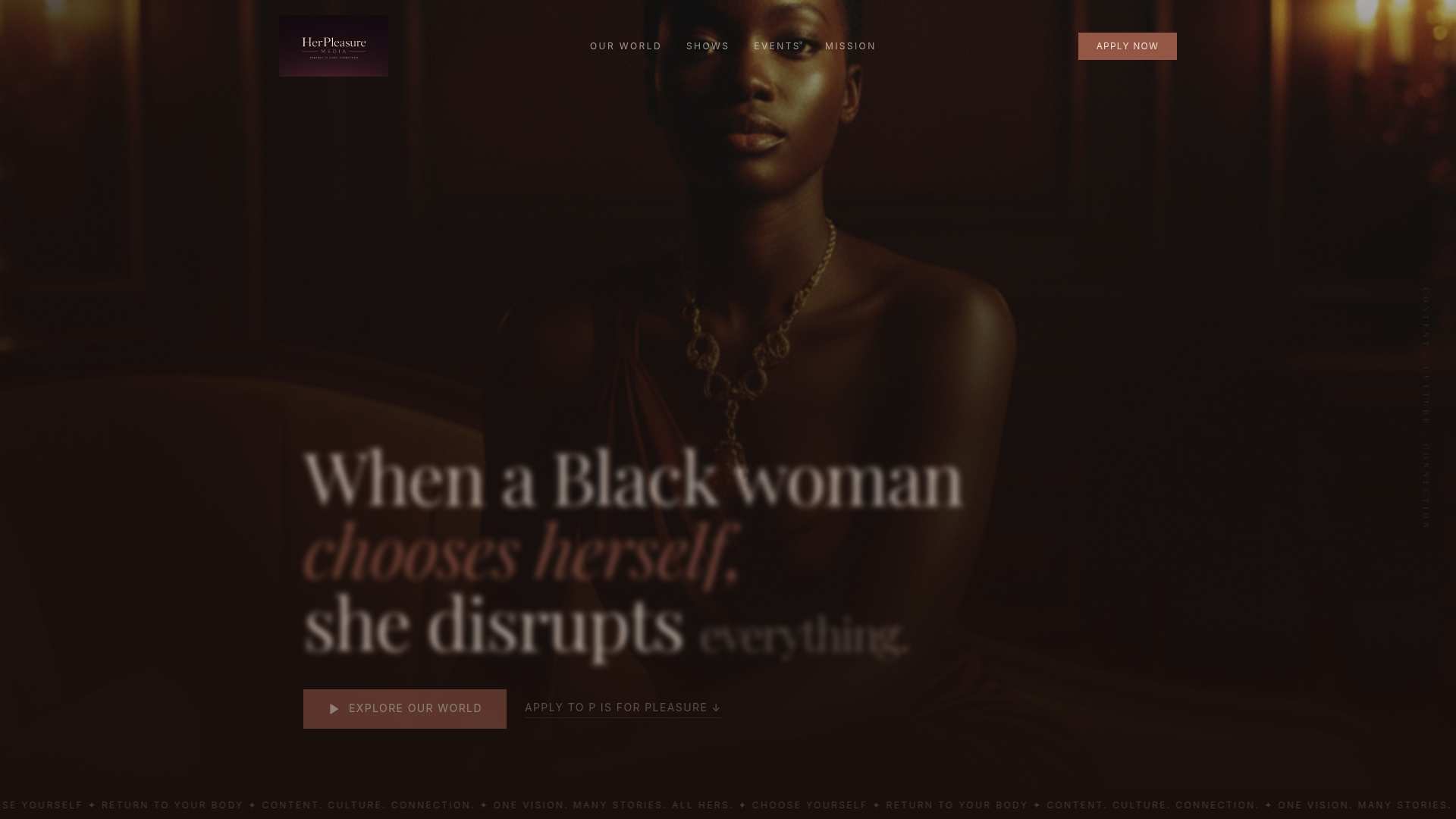
If you're serious about developing a female-led media brand that centers real voices and builds lasting community, Herpleasuremedia is the space you've been looking for. As a cultural conversation platform built specifically for Black women, Herpleasuremedia covers liberation, bodily autonomy, sexual freedom, and generational healing across audio, visual, scripted television, literature, and live events. Whether you're in the early stages of building or ready to scale, explore Herpleasuremedia to find resources, community, and content that actually speaks to your experience. Start with the Daily Reflection to ground your creative practice in something meaningful every day.
FAQ
What is the first step in developing a female-led media brand?
Define your niche and brand pillars before creating any content. A specific editorial identity, not a broad topic category, is what separates brands that last from ones that fade.
How do female-led media brands make money?
Sustainable revenue comes from a layered approach: free content builds trust, low-ticket digital products convert warm audiences, and premium offerings like events, memberships, and licensing deals generate significant income over time.
What are the biggest challenges in female media leadership?
Beyond standard startup obstacles, female founders face disproportionate media scrutiny and myth cycles. Building a brand around editorial ideas and community rather than personal narrative helps protect against those cycles.
How do I build an audience I actually own?
Move your social followers to an email list and private community as quickly as possible. Owned platforms compound in value over time, while social reach depends entirely on algorithms you don't control.
When should I bring in other voices or team members?
Bring in contributors or a content manager as soon as your revenue allows, even part-time. If your brand's performance drops every time you step back, you've built a personal brand, not a media company. That's the signal to start building a team.