
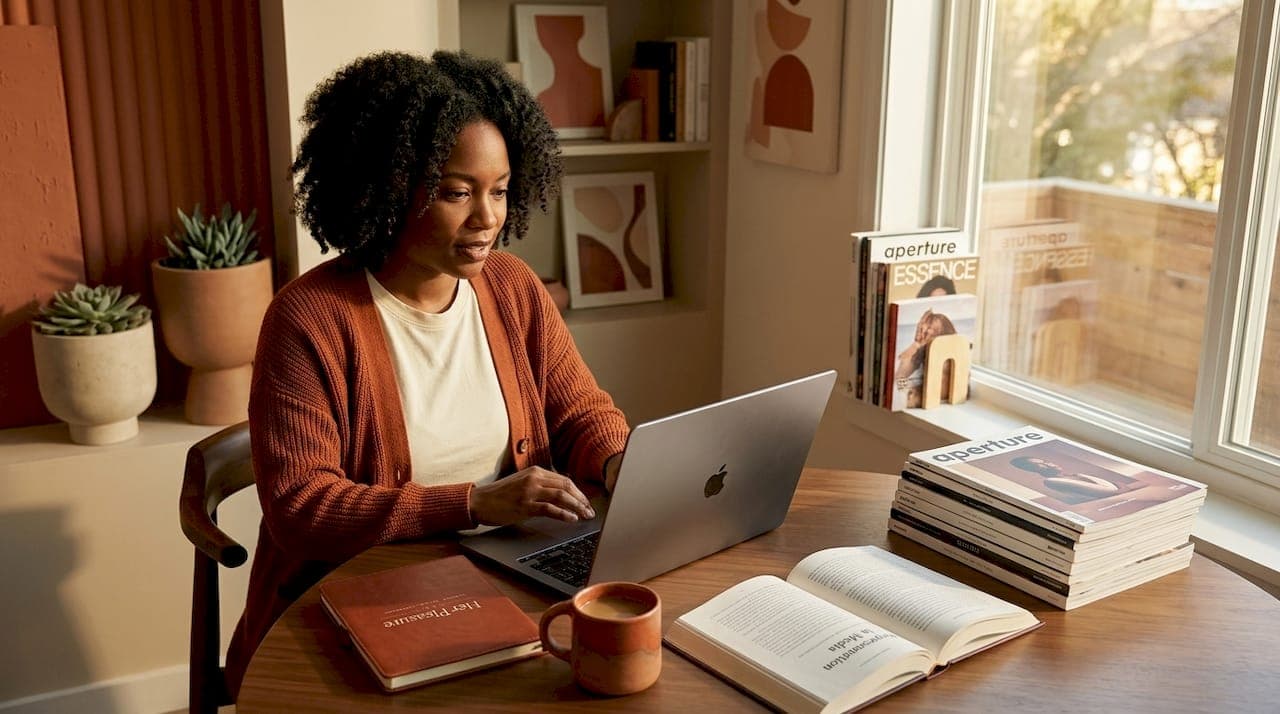
The types of black women media representation you encounter across film, television, music, and digital platforms are not random. They carry centuries of cultural baggage, shape public policy attitudes, and directly affect how Black women are treated in hospitals, courtrooms, and boardrooms. This guide breaks down the full spectrum of portrayals — from the most damaging historical tropes to the complex, creator-driven counternarratives rewriting the rules. Whether you are a researcher mapping representation patterns or a cultural enthusiast trying to make sense of what you see on screen, this is the analysis you need.
Table of Contents
- Key takeaways
- 1. The classic stereotypes shaping how are black women portrayed
- 2. The Jezebel and the body: a legacy from Sara Baartman to pop culture
- 3. Contemporary counternarratives disrupting traditional stereotypes
- 4. How representation varies across media platforms
- 5. Misogynoir and the intersectional dimension of representation
- 6. The real-world impact of media on Black women's lives
- 7. Comparing harmful stereotypes with emerging nuanced portrayals
- My take on where this conversation needs to go
- Explore more with Herpleasuremedia
- FAQ
Key takeaways
| Point | Details |
|---|---|
| Stereotypes have real consequences | Media portrayals of Black women influence healthcare, employment, and policy decisions in measurable ways. |
| Creator control changes everything | Black women behind the camera produce more nuanced, humanized portrayals than visibility alone ever achieves. |
| Counternarratives are gaining ground | Creators like Issa Rae and Shonda Rhimes have shifted the conversation toward complexity and authentic storytelling. |
| "Positive" images can still harm | Tropes like the Strong Black Woman mask real vulnerability and justify systemic neglect. |
| Platform matters as much as content | Representation of Black women varies significantly across film, TV, music videos, and social media. |
1. The classic stereotypes shaping how are black women portrayed
Before you can analyze what's changing, you need to understand what has been calcified into the cultural imagination for over a century. These are not just outdated caricatures. They remain active frameworks that writers, casting directors, and audiences unconsciously apply.
The five most persistent stereotypes in the media portrayal of Black women are:
- The Mammy: The self-sacrificing, nurturing caretaker who exists to serve white families. Her own desires and interior life are irrelevant to the narrative. Think Hattie McDaniel's Oscar-winning role in Gone with the Wind (1939), which was celebrated by Hollywood while Black audiences recognized the confinement.
- The Jezebel: The hypersexualized temptress whose sexuality is framed as inherently dangerous or deviant. This trope has roots in the justification of sexual violence during slavery and continues to shape how Black women's bodies are framed in music videos and advertising.
- The Angry Black Woman: Any expression of frustration, grief, or legitimate critique gets flattened into irrational rage. This trope is weaponized to dismiss Black women's perspectives in professional and political spaces.
- The Strong Black Woman: On the surface, this sounds like praise. But the Strong Black Woman trope functions as a barrier to empathy and support, framing Black women as incapable of needing care or rest.
- The Bad Mother: A stereotype that intersects with race and class to pathologize Black motherhood, often used to justify punitive welfare policies and child welfare interventions.
Harmful tropes like these have long defined Black women in media, but recent counternarratives are centering them as complex strategists and leaders.
Pro Tip: When analyzing a film or TV show, ask not just whether a Black woman is present, but which of these five frameworks her character operates within. That question reveals more than any diversity metric.
2. The Jezebel and the body: a legacy from Sara Baartman to pop culture
The sexualization of Black women's bodies in media does not exist in a vacuum. It traces directly to historical spectacles of Black female flesh as something to be displayed and consumed. From Sara Baartman to contemporary pop icons, the fetishistic framing of Black women's bodies is a longstanding cultural issue that continues to shape music videos, film, and advertising today.
This matters for researchers because it means the Jezebel trope is not simply about individual characters. It is a systemic visual language. When a Black female pop star's video centers her body in a way that a white counterpart's does not, that is not coincidence. It reflects a media ecosystem that has historically treated Black female sexuality as spectacle rather than self-expression.
The distinction between spectacle and agency is the critical analytical line. Black women reclaiming their sexuality on their own terms, as seen in Beyoncé's Lemonade or Janelle Monáe's work, represents a fundamentally different category of representation than the Jezebel trope, even when the imagery appears superficially similar.
3. Contemporary counternarratives disrupting traditional stereotypes
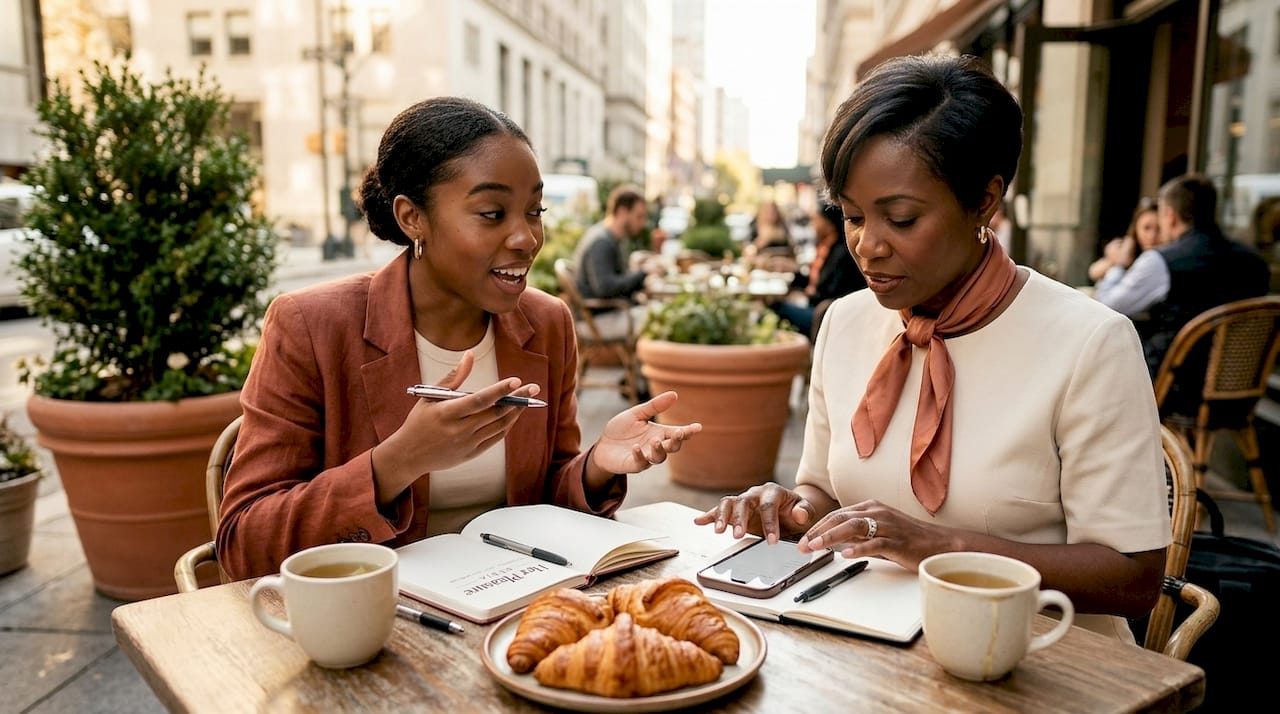
The most significant shift in the representation of Black women over the last two decades has not been more Black faces on screen. It has been Black women gaining creative control behind the camera, which drives nuanced, non-stereotypical portrayals in ways that visibility alone never achieves.
Consider what this shift has produced:
- Issa Rae's Insecure gave audiences an awkward, self-sabotaging, romantically messy Black woman in Issa Dee. She was not a role model. She was a person. That distinction is the entire point.
- Shonda Rhimes's Scandal and How to Get Away with Murder placed Black women at the center of morally complex, politically charged narratives where their flaws were features, not failures.
- Ava DuVernay's documentary and narrative work consistently reframes Black women's stories within systems of power rather than treating them as individual anomalies.
- Digital platforms and podcasts have created entirely new categories of Black women's storytelling, where the gatekeeping of traditional Hollywood simply does not apply.
Audiences want Black women portrayed as fully human, capable of being flawed, cruel, selfish, and joyous, not confined to aspirational ideals or respectability politics. This is the defining tension in contemporary Black women's representation: the pull between the "positive image" that advocates demand and the messy humanity that actually resonates.
4. How representation varies across media platforms
The types of black women media representation shift significantly depending on the platform. Understanding these differences is not just academic. It tells you where the most harm is concentrated and where the most freedom exists.
- Film: Black women in film have historically been confined to supporting roles, love interests, or the Mammy archetype. In 2020, only about 7% of filmmakers were African American, with Black women directors comprising an even smaller fraction. Leading roles with genuine complexity remain rare, though films like The Woman King (2022) signal meaningful movement.
- Television: Serialized storytelling gives Black female characters room to develop across seasons in ways that a two-hour film rarely allows. This is why television has been the most fertile ground for counternarratives.
- Music videos and pop culture: This is where the Jezebel trope remains most active. The visual language of mainstream music videos frequently reduces Black women's bodies to props. The counter-tradition, from Erykah Badu to Lizzo, actively resists this framing.
- Social media and digital content: This is the most democratized space. Black women creators on YouTube, TikTok, and podcasting platforms operate entirely outside traditional gatekeeping, producing representation that is accountable to their own communities rather than network executives.
5. Misogynoir and the intersectional dimension of representation
You cannot fully analyze the media portrayal of Black women without the concept of misogynoir, a term coined by scholar Moya Bailey to describe the specific intersection of anti-Black racism and misogyny that Black women experience. Misogynoir uniquely renders Black women hyper-visible as targets and invisible as fully human beings with agency.
This explains a phenomenon that puzzles many researchers: why some "positive" portrayals still feel reductive. A Black woman character can be powerful, successful, and admired on screen while still being written without interiority, without vulnerability, without the kind of ordinary human contradiction that makes a character feel real. That is misogynoir operating at the level of craft.
The political implications are direct. When Black women are portrayed as either dangerous or superhuman, the public struggles to see them as ordinary people who deserve ordinary protections. That perceptual gap has consequences in every institution from healthcare to criminal justice.
6. The real-world impact of media on Black women's lives
The impact of media on Black women is not confined to cultural commentary. It shows up in mortality statistics and hiring data.
| Media portrayal | Real-world consequence |
|---|---|
| Strong Black Woman trope | Dismissal of pain; under-treatment in medical settings |
| Angry Black Woman stereotype | Professional penalties for assertiveness; leadership exclusion |
| Jezebel trope | Increased vulnerability to sexual harassment; victim-blaming |
| Bad Mother stereotype | Disproportionate child welfare interventions; punitive policy support |
| Absent or minor roles | Reduced political visibility; underrepresentation in leadership |
Black women lose infants at twice the rate of white women, and researchers have directly linked negative media stereotypes to policy attitudes that justify cutting healthcare funding for Black communities. This is not a metaphor. The stories told about Black women on screen shape what legislators believe Black women deserve.
Pro Tip: When researching the impact of media on Black women, look for studies that connect media consumption data with policy attitude surveys. The correlation between stereotype exposure and reduced empathy in policymakers is one of the most under-cited findings in this field.
7. Comparing harmful stereotypes with emerging nuanced portrayals
The clearest way to see how much has changed, and how much has not, is a direct comparison between the traditional stereotype framework and the counternarrative framework now emerging in Black women's representation.
| Traditional stereotype | Counternarrative equivalent |
|---|---|
| Mammy: selfless caretaker | Complex professional navigating work and personal identity (Insecure, Abbott Elementary) |
| Jezebel: hypersexualized object | Self-directed sexual agency on her own terms (Lemonade, Pose) |
| Angry Black Woman: irrational | Justified anger as political clarity (Scandal, Queen Sugar) |
| Strong Black Woman: invulnerable | Vulnerability and mental health as strengths (Harlem, Run the World) |
| Bad Mother: negligent | Nuanced motherhood under systemic pressure (Queen Sugar, Cherish the Day) |
The ongoing challenge is that counternarratives and stereotypes often coexist within the same production. A show can give a Black woman character genuine complexity in one episode and fall back on the Angry Black Woman shorthand in the next. Black women have an outsized impact on film success and cultural trends, but fragmented narrative power still limits their authentic representation even in projects that claim to celebrate them.
My take on where this conversation needs to go
I've spent a long time watching how the conversation around Black women's representation gets policed from within and without, and the pattern I keep seeing is this: the demand for "positive images" is often just another cage.
When we insist that Black women on screen be aspirational, dignified, and above reproach, we are still telling Black women what they are allowed to be. The most liberating portrayals I've encountered are the ones where a Black woman character is genuinely allowed to be wrong. To be petty. To make choices that hurt people she loves. Not because suffering is the point, but because full humanity includes the full range.
What I've learned is that the real measure of progress is not whether a Black woman is the hero. It's whether she gets to be a person. Issa Rae understood this when she built Issa Dee as someone who consistently makes her own life harder. That character did more for representation than a dozen "strong" leads who never doubted themselves.
The other thing I'd push back on is the idea that visibility is the goal. Narrative control by Black women creators is the goal. A Black woman on screen written by someone who sees her as a symbol rather than a subject is not progress. It's a more sophisticated version of the same old problem.
— Tiana
Explore more with Herpleasuremedia
Herpleasuremedia exists precisely because these conversations deserve more than a think piece. As a platform built around the liberation, bodily autonomy, and generational healing of Black women, Herpleasuremedia creates the kind of content that takes representation seriously across audio, visual, scripted television, literature, and live events. If this article resonated with you, the Daily Reflection series offers ongoing commentary on Black women's experiences and the cultural forces shaping them. For the full scope of what Herpleasuremedia is building, explore the platform and find the stories that actually center you.
FAQ
What are the most common types of Black women media representation?
The most common types include the Mammy, Jezebel, Angry Black Woman, Strong Black Woman, and Bad Mother stereotypes, alongside emerging counternarratives that portray Black women as complex, flawed, and fully human.
How does media portrayal of Black women affect real life?
Negative media portrayals directly influence policy attitudes, healthcare treatment, and employment discrimination. Black women face measurably worse medical outcomes that researchers link in part to stereotypes that dismiss their pain and vulnerability.
What is misogynoir and why does it matter for media analysis?
Misogynoir is the intersection of anti-Black racism and misogyny that specifically targets Black women, making them hyper-visible as stereotypes while rendering their full humanity invisible. It explains why even some "positive" portrayals can still be reductive.
Who are the Black women creators changing representation in media?
Creators like Issa Rae, Shonda Rhimes, and Ava DuVernay have significantly shifted the types of Black women media representation by exercising creative control and prioritizing authentic, morally complex characters over aspirational archetypes.
Does platform type affect how Black women are portrayed?
Yes. Television allows more character development than film, social media bypasses traditional gatekeeping entirely, and music videos remain one of the spaces where sexualized stereotypes are most persistently reproduced.